Short answer: Not compared with the alternatives. ENERGY STAR says certified mini splits use up to 60% less energy than standard electric radiators, and the Building America Solution Center notes that ducts outside conditioned space can lose more than 30% of heating and cooling energy. How much you actually use depends on unit size, climate, insulation and how you set it.
What the official sources say
- ENERGY STAR: Because mini splits move heat rather than generate it, certified models use up to 60% less energy than standard home electric radiators. It also notes that almost half of a typical household's energy bill goes to heating and cooling.
- Building America Solution Center: Ducts outside conditioned space can lose more than 30% of heating and cooling energy through leaks and conduction. Ductless indoor units avoid those distribution losses. Ducted systems can avoid them too when their ducts and air handler are inside the thermal boundary.
- Inverter claim from Trane: Trane says variable speed inverter mini splits can cut heating and cooling energy use by up to 40% compared with a conventional system. That is a manufacturer claim about its own product type.
None of these give you a dollar figure for your house. The honest answer is that it depends, and you can estimate it.
How to estimate your own cost
You need three numbers:
- Power draw in watts. Look at the nameplate or spec sheet for your outdoor unit for rated power input. Rated input is not necessarily the maximum. Check whether the specification lists rated or maximum input; actual draw changes with load and inverter speed.
- Hours of run time per day.
- Your electricity price per kWh. It is on your utility bill.
The math: watts divided by 1,000, times hours, times price. For example only: a unit drawing 600 watts for 8 hours uses 4.8 kWh. At a price of 15 cents per kWh, that is about 72 cents. Those numbers are made up to show the math. Use your own.
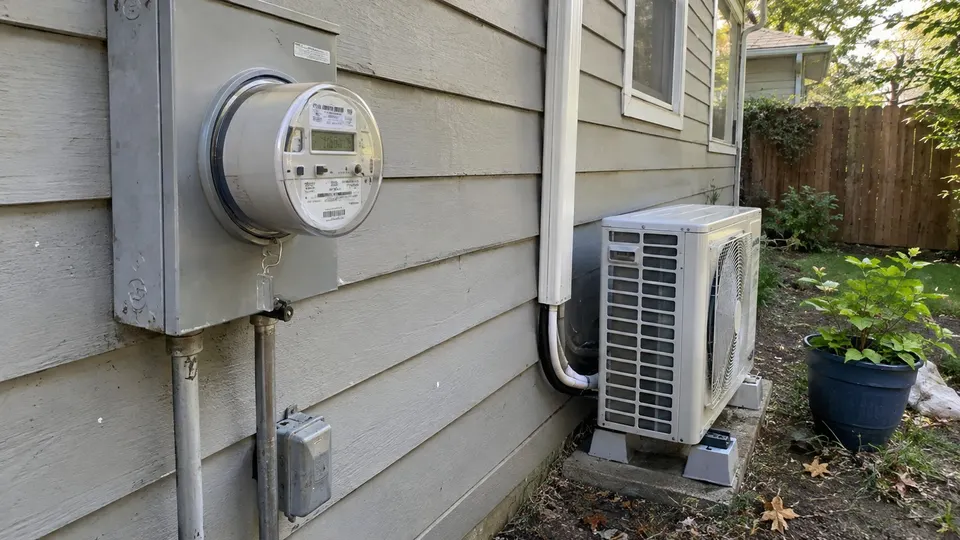
Your utility bill or utility smart-meter app can help you track use. Do not connect a hardwired mini split to a plug-in meter; ask an electrician about suitable circuit monitoring.
Why the bill varies
- Size. The Building America Solution Center says oversized or poorly placed indoor units cause short cycling and waste energy. Too small a unit runs hard all the time.
- Climate and insulation. Lennox says extreme heat, cold or humidity raise demand. Poor insulation and air leaks make the unit adjust output more often.
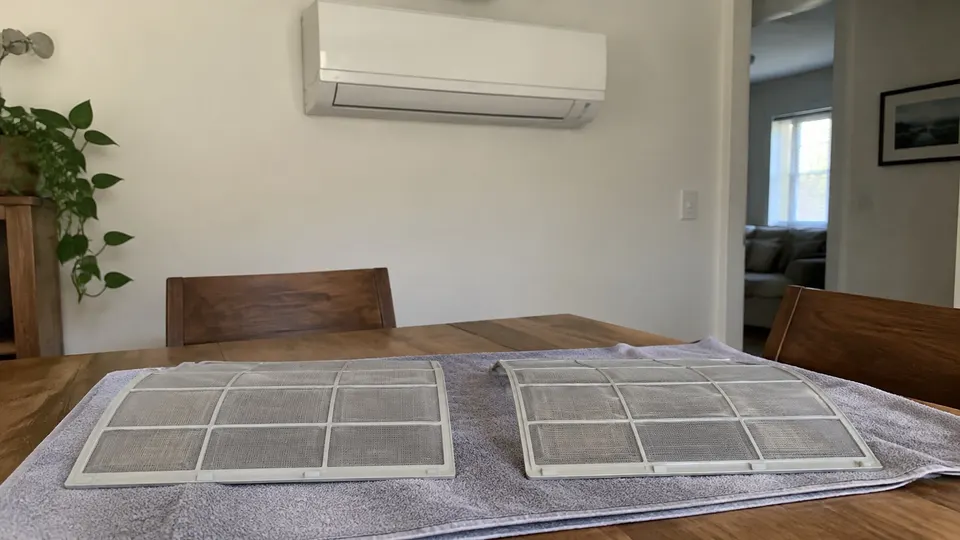
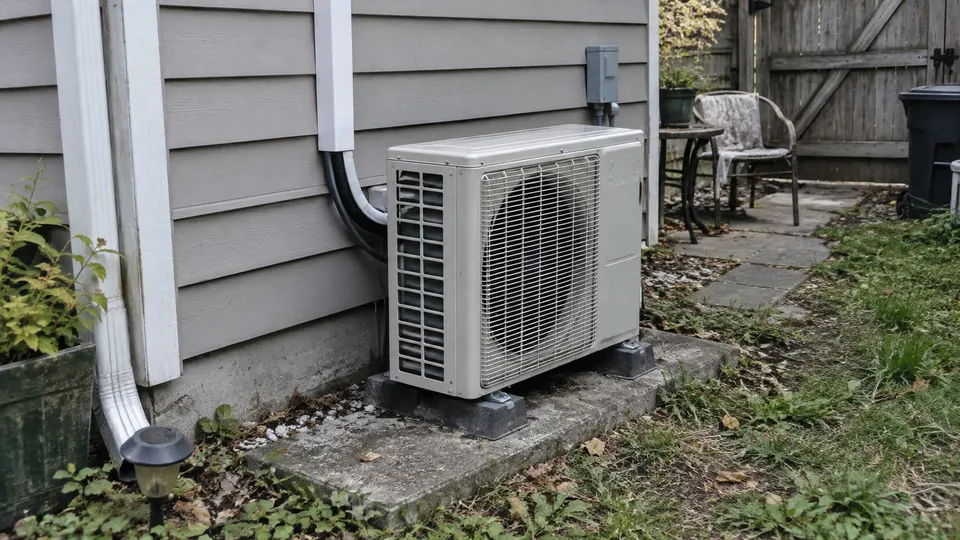
- Dirty filters and blocked outdoor units. Both force the system to work harder. See how to clean a mini split.
- Multi-zone mismatches. BASC says in a multi-split system all indoor units must be in the same mode. Mixed cooling and heating can cause large drops in efficiency.
Settings that can cut use
Start with these settings from the manufacturer guidance below, with the remote in your hand. Make one change at a time and give it a day.
These come from manufacturer manuals. Which ones you have depends on your model.
- Econo or energy-saving modes. Daikin's Econo mode limits the compressor speed to reduce power draw. Mitsubishi's Econo Cool changes airflow and set temperature in Cool mode. Gree has an energy-saving function and a Sleep mode that moves the temperature gradually overnight. See the remote guides for Mitsubishi, Daikin and Gree.
- Smart Set on Mitsubishi. Mitsubishi suggests a setting 4 to 6°F warmer in Cool or cooler in Heat for an empty room or while sleeping.
- Auto fan. Carrier says to use the Auto fan setting so the system picks the most efficient speed.
- Do not leave the temperature extreme. Lennox warns that setting the temperature more than 4 or 5 degrees from the room temperature can cause the unit to cycle on and off. See mini split not cooling.
- Powerful or Turbo only briefly. Daikin's Powerful mode raises outdoor capacity and runs 20 minutes. Use it for a quick change, not all day.
Is it running too much?
A mini split running for long periods at low speed is normal and often more efficient. See do mini splits turn off when the temperature is reached. If your bill jumped with no change in weather, check the filter and outdoor unit first, then ask a technician to look at it.
Electrical protection is a separate question from energy use. Do not pick a breaker from a bill estimate or wattage calculation; use the model ratings and a qualified electrician as explained in the mini split breaker-size guide.
Related reading
- Running costs also depend on age, so see mini split lifespan.
Sources
- ENERGY STAR: Ductless heating and cooling
- Trane: Do mini-splits turn off when temperature is reached
- Lennox: Do mini splits turn off when temperature is reached
- Building America Solution Center: Ductless (mini-split) heat pumps
- Carrier: How long do mini splits last (settings tips)
- Daikin user reference guide
- Mitsubishi Electric operating instructions, MSZ-FS
- Gree Vireo Gen3 owner's manual
- Lennox: Mini split not cooling
This is general information, not a bill prediction.