Short answer: A condensate pump is a small pump that moves a mini split's drain water uphill or a long way when gravity cannot do it. If it stops, water backs up and the indoor unit leaks or shuts down. Owners can inspect the tubing and, with power off, clean the reservoir screen and float. Anything electrical is a technician's job.
What a condensate pump does
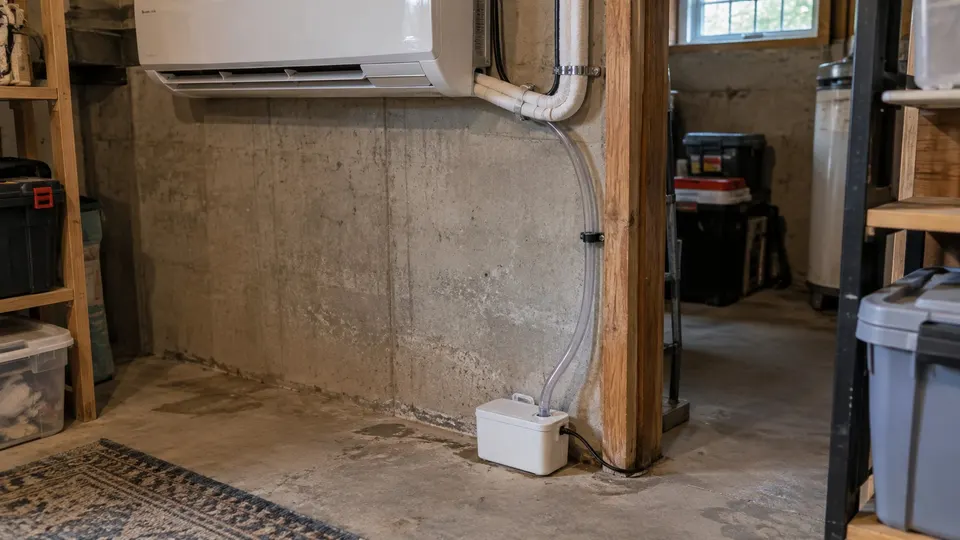
A mini split drains by gravity when the line can slope down and out. When it cannot, an installer adds a pump. The pump sits in a small reservoir that fills with drain water. A float inside rises with the water, and the pump runs to push it out through a tube.
Pump makers add a safety feature. The Little Giant manual describes an overflow switch. If the water gets too high, it can shut the air conditioner off or sound an alarm. Beckett's mini split pump manual describes a safety switch that cuts off the compressor or gives an alarm.
Little Giant also says that where a failed pump could cause property damage, a backup system or alarm should be used.
Signs the pump is the problem
- Water on the floor or wall under the indoor unit, but the drain line outside is clear
- The unit shuts off or shows a water or drain error
- An audible alarm, if one was installed
- A pump that never runs, or runs constantly, or is unusually loud
- Water standing in the reservoir
Check mini split drain line and mini split leaking water first. A clogged drain line downstream of the pump gives the same signs.
Safe checks
Put a towel down first, since a little water may spill. Only look at what you can see. Do not open the electrical box.
- Turn the mini split off at the remote. Both makers say to disconnect the pump from its electrical supply before servicing it. If you cannot unplug it, leave it to a technician.
- Look at the discharge tubing. Little Giant says there must be no kinks, twists or breaks that could block the tubing. Cable ties must not crush it.
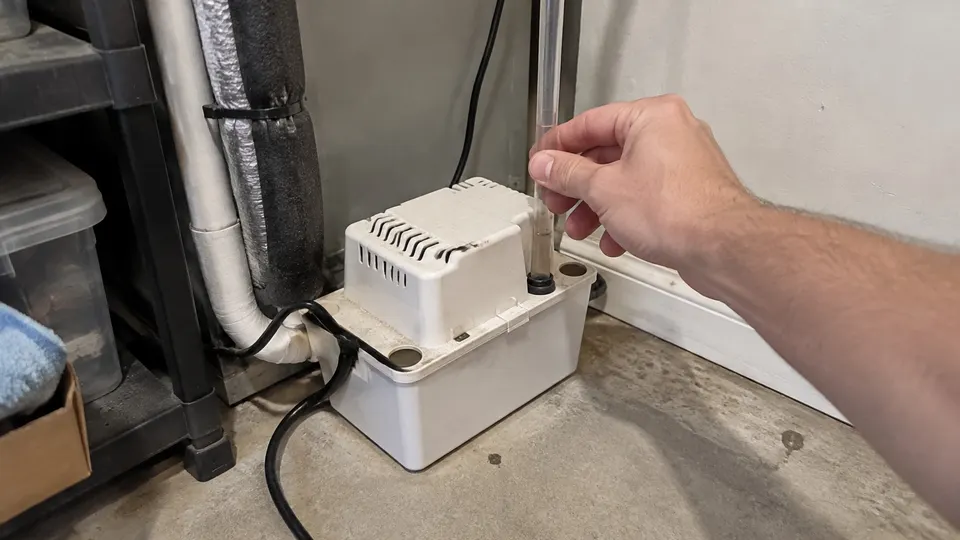
- Look at the thin vent tube. Little Giant says it must run upward, not kinked or blocked, and must not be cut short. Beckett says the vent tube must not contain water.
- Check that the reservoir is level. Little Giant says a reservoir that is not level can stop the float from working properly.
- Clean the reservoir if you can reach it. With power off, Little Giant's steps are: remove the reservoir top, rinse the mesh screen under running water, wipe the reservoir with a damp towel, and rinse the float if it is dirty or sticks. Do not take the float apart. Beckett's cleaning solution is 95% water and 5% bleach for the sump, float and filter.
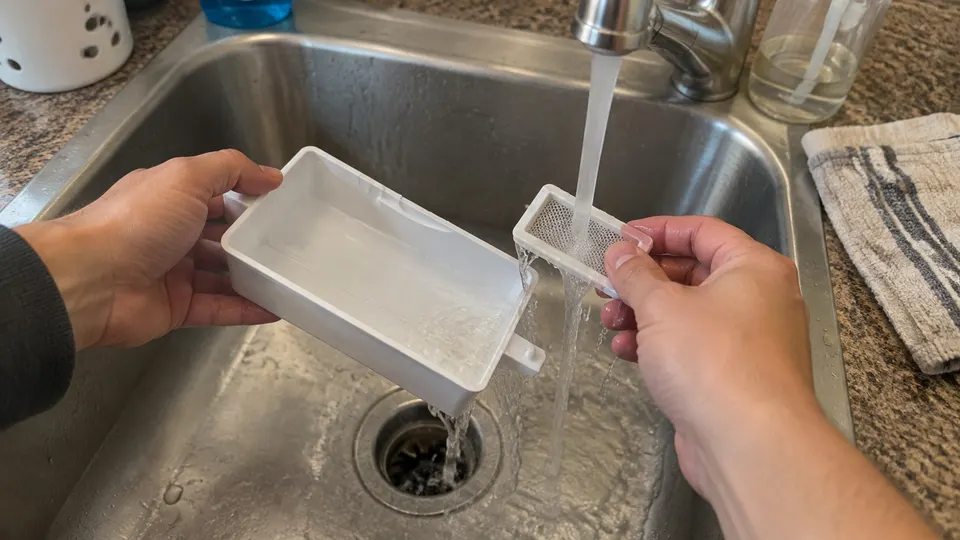
- Put it back and test after cleaning. Reseat the top, restore power, and run the unit on cool. Both makers describe pouring water into the unit's drain tray to see the pump start and stop. Only do this if you can do it without spilling. Do not keep pouring if water is about to flood.
Little Giant says to inspect and clean the reservoir when the air conditioner is serviced and at the start of each season. Dirty environments need it more often.
Keeping the pump healthy
Make the reservoir check part of your seasonal routine, and keep the area around the pump dry and clear. Do not store things against the tubing.
When to call a technician
- The pump has power but does not run after cleaning
- The pump hums, overheats or trips a breaker
- The pump needs wiring, replacement or a different size. Little Giant says capacity and lift depend on your unit
- You are not sure what is wired to the safety switch
- The leak continues after the pump and drain line are clear
Do not run a pump dry, and do not handle it with wet hands or while standing in water. Both manuals warn about this.
Related reading
- A pump can make gurgles and clicks, so see noise when the unit is off.
Sources
- Little Giant EC-1 series condensate pump installation and operation manual
- Beckett MS601 and MS602 mini condensate pump user manual
- Carrier: Mini split leaking water
Follow your unit's and your pump's own manuals. This is general information.