Short answer: A mini split can make brief clicks, crackles or dripping sounds after you switch it off. Remote off is not disconnected power, and some models still use standby or protective functions. Identify the sound and timing before calling it normal. Persistent rattling, rapid tapping, burning smells or repeated breaker trips need professional attention.
Decide what "off" means
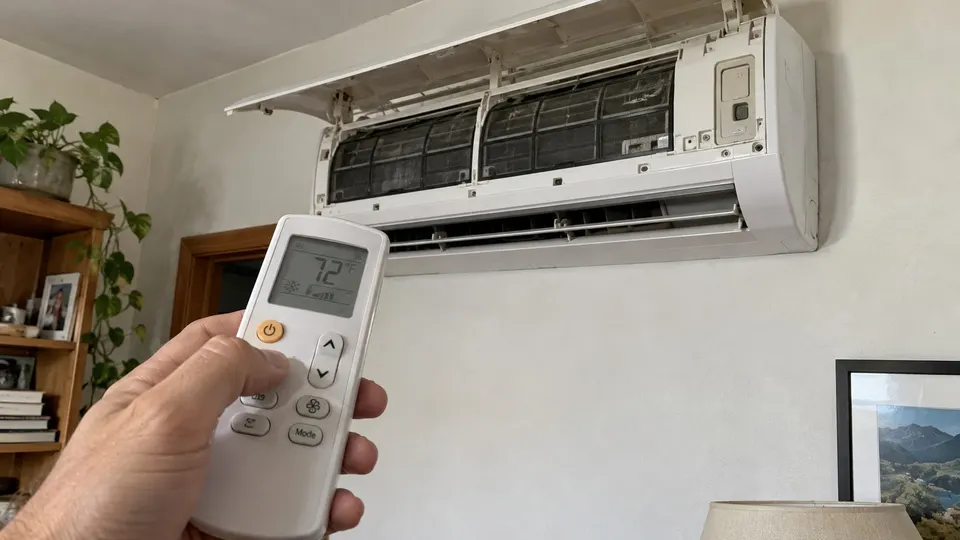
Did you press remote OFF, did the room reach its target, or was power disconnected? These are different states. A satisfied thermostat is not necessarily a shutdown; see the temperature-reached guide.
Remote-off equipment can remain energized. LG describes periodic relay clicks for outdoor-unit preheating on certain wall-mounted products even when the controller is off. That is a documented example, not a rule that every brand should click every two hours.
Do not use the breaker as a daily sound-control switch. Follow your model's shutdown instructions, especially in cold weather. Never open electrical covers to check whether it is live.
Match the sound and timing
| Sound | A documented possibility | When to seek help |
|---|---|---|
| Brief crackle or pop around a temperature change | Plastic expanding or contracting | Loud, worsening or continuous sound |
| Occasional click with power connected | Relay or standby function on some models | Rapid repeated clicking or starting problems |
| Brief trickling after shutdown | Water at a drain-hose bend | Indoor water, stains or continuing leakage |
| Hiss, bubble or gurgle | Refrigerant flow during operation; pump sounds on pump-equipped units | Persistent off-state sound with faults, poor performance or uncertain cause |
| Soft hum | Energized function or equipment not actually stopped | New persistent hum, vibration, heat or warning signs |
| Loud rattle, rapid tapping or high-pitched whine | Possible fan, pipe, mounting or component problem | Arrange service without opening covers |
LG documents refrigerant-flow noise during operation and low fan speed. That does not prove every gurgle hours after shutdown is harmless. A ceiling-unit pump example also does not mean every wall unit has a pump.
Step 1: Record the pattern
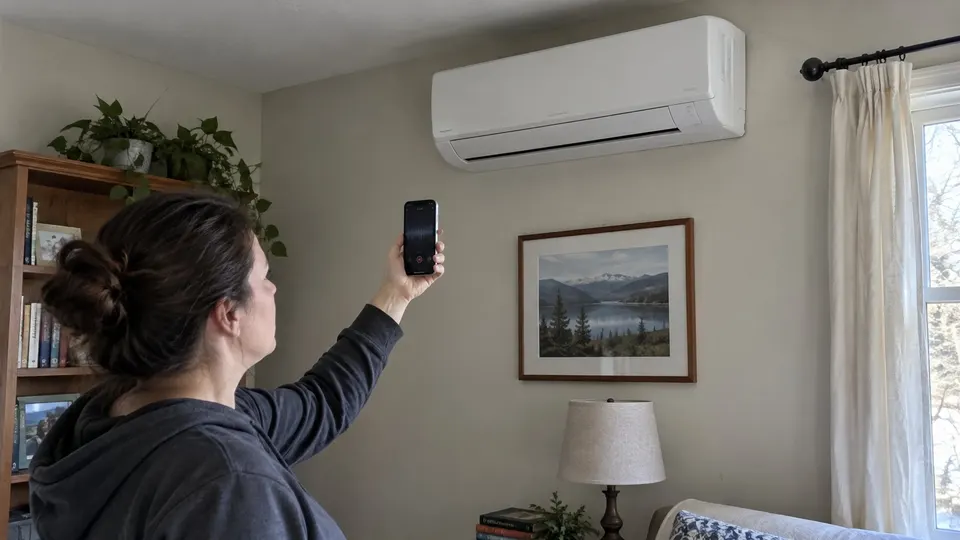
- Note what happened before the sound: shutdown, heating, cooling, defrost or reaching the target.
- Locate it approximately: indoor unit, drain area or outdoor unit. Stay outside covers and grilles.
- Make a short phone recording from a safe position. Note whether it fades or returns.
- Record the model and any visible code.
- Check the manual for after-run, self-clean, pump or standby behaviour.
Do not climb or hold the phone against moving equipment. Timing and the model help support distinguish a normal sequence from a fault.
Step 2: Check visible conditions only
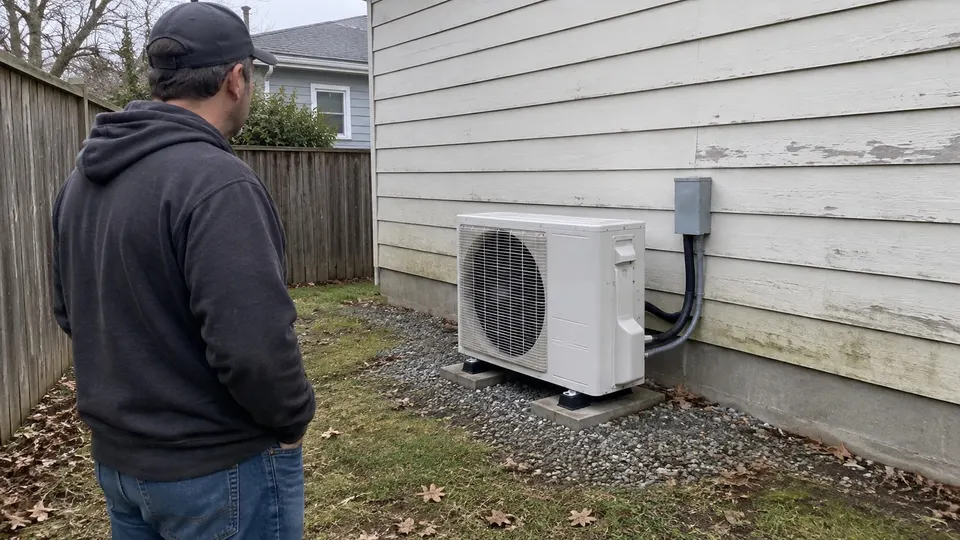
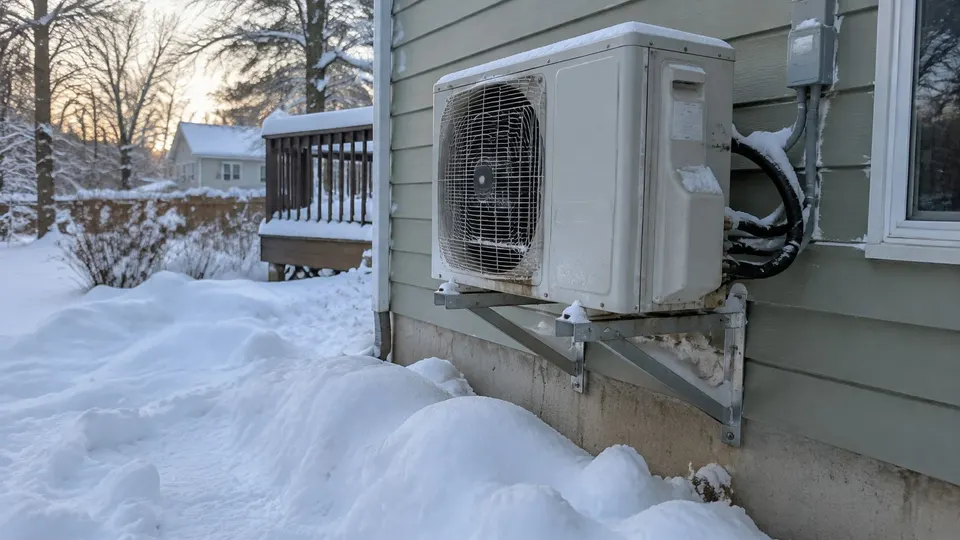
Look for indoor water, stains or a blocked intake. From the ground, check outdoor airflow clearance and note whether a drain hose is striking the wall in the wind.
Do not put tools through grilles, remove fan covers, tighten internal pipes or move the outdoor unit. Mounting vibration and fan contact need professional inspection. For indoor water, use the leaking-water guide rather than explaining it away as refrigerant noise.
You do not need repeated test starts and stops. If normal use resumes, compare the sound with the manual. If it is new, worsening or unexplained, send the recording to the installer or manufacturer.
Warning signs that change the next step
Stop use and arrange service for grinding, loud persistent rattling, rapid tapping or a new high-pitched sound. Smoke, burning smells, arcing or repeated breaker trips need prompt attention. Disconnect power only if safe without approaching damaged equipment; get emergency help for an immediate fire hazard.
A soft sound alone is not proof of safety. Do not keep resetting a tripping breaker or enlarge it to hide the fault.
Keep future checks simple
Follow the model's filter schedule and keep outdoor airflow clear. Save a sound record if the pattern changes. Leave refrigerant, electrical, fan and mounting repairs to qualified people. Describe the sound accurately instead of buying a guessed replacement part.
Sources
- LG USA sound guide, normal sounds and service warnings.
- LG standby relay/preheating explanation, a model-dependent controller-off example.