Short answer: Most mini splits have a main mesh filter that you vacuum or rinse every few weeks. Some also have a second filter, such as an enzyme, deodorizing or silver particle filter, that follows different rules. Use lukewarm water, never hot, dry every filter in the shade, and check your manual for each filter's schedule.
First, find out which filters you have
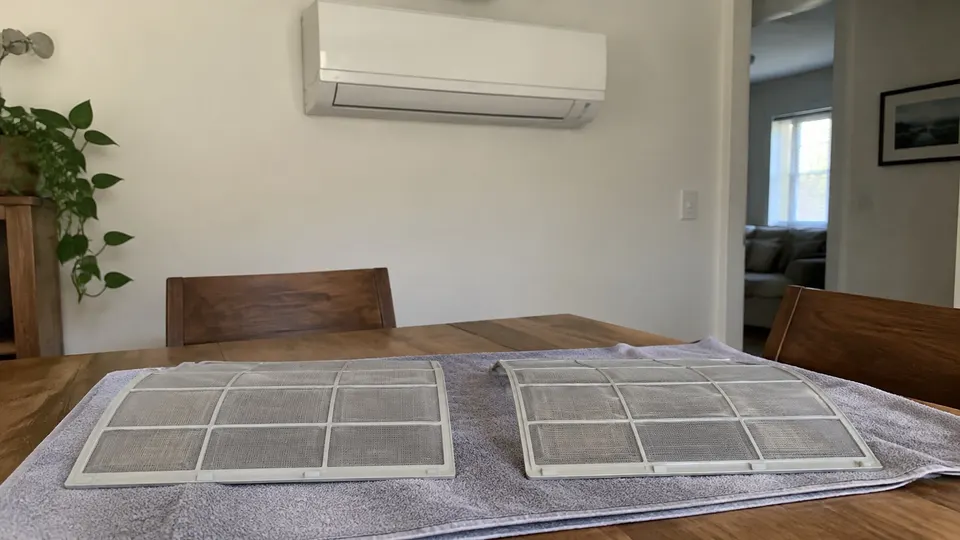
Pull the front panel open and look. Many units have one flat mesh filter on each side. Some add a second small filter clipped on top of or beside it.
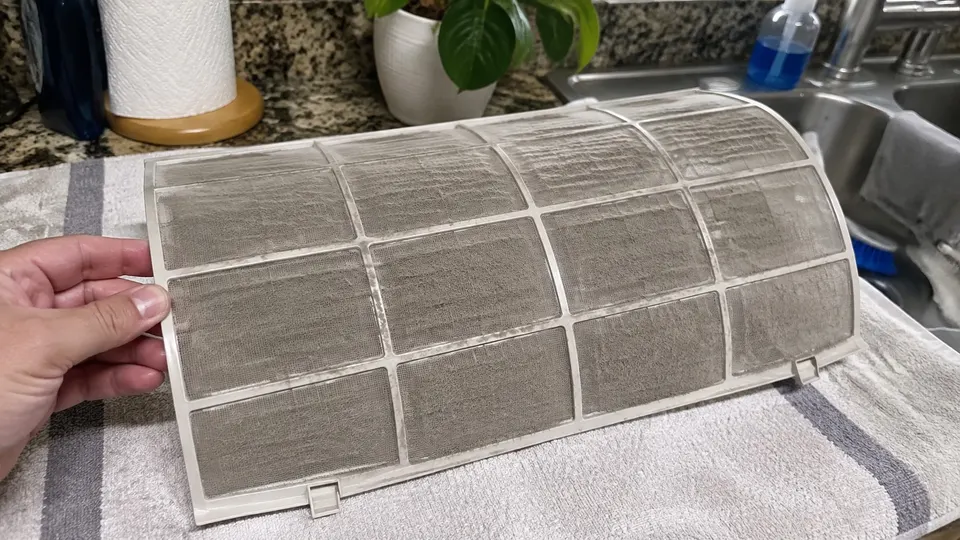
Two real examples show how much this varies:
- Mitsubishi MSZ-FS series. The manual lists a nano platinum air filter (the main mesh filter), a blue electrostatic anti-allergy enzyme filter, and a black deodorizing filter.
- Daikin FTXTP series. The guide lists air filters plus a titanium apatite deodorizing filter and a silver particle (Ag-ion) filter.
If your unit has only the mesh filters, the steps in how to clean a mini split cover everything. This page is for telling the filter types apart.
Cleaning schedule by filter type
These are the schedules from the two manuals above. They are examples, not rules for your unit.
| Filter | Schedule | How |
|---|---|---|
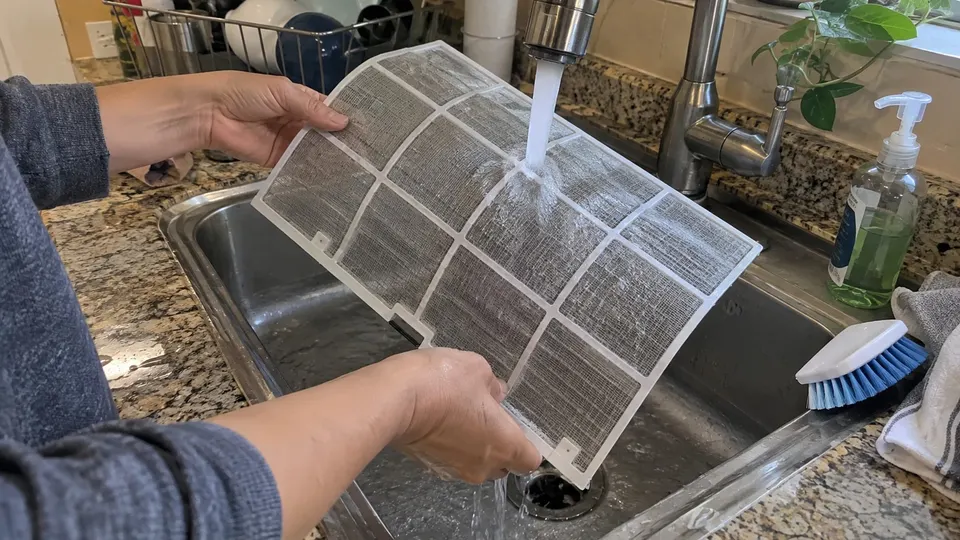
| Main mesh filter (Mitsubishi nano platinum) | Every 2 weeks | Vacuum, or rinse with water. Dry in the shade |
| Main air filters (Daikin) | Every 2 weeks recommended | Rinse or vacuum. For stubborn dust, use neutral detergent in lukewarm water. Dry in the shade |
| Enzyme filter (Mitsubishi, blue) | Every 3 months. Replace every year | Vacuum. If dirt stays, soak in lukewarm water and rinse. Dry in the shade |
| Deodorizing filter (Mitsubishi, black) | Every 3 months | Vacuum, or soak in 86 to 104°F (30 to 40°C) water for about 15 minutes, then rinse. Dry in the shade. Replace if smell or dirt will not come off |
| Ag-ion and deodorizing filters (Daikin) | Clean every 6 months. Replace every 3 years | Vacuum, soak 10 to 15 minutes in warm water, shake off water, dry in the shade. Do not wring it out |
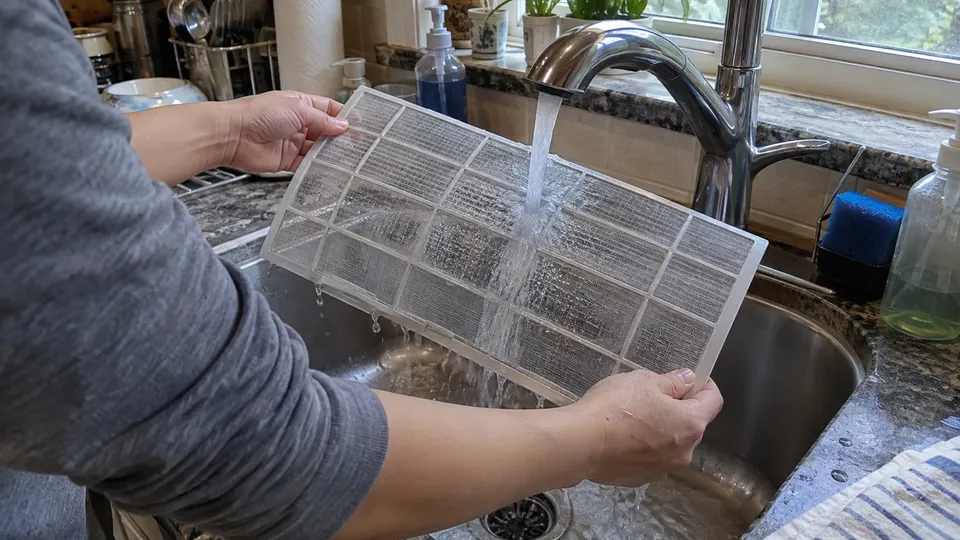
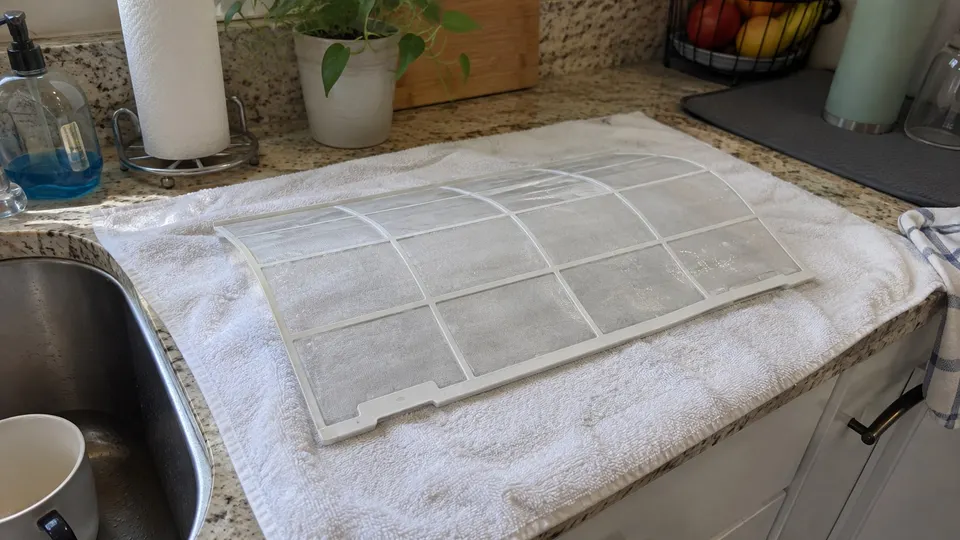
The rules that repeat across makers
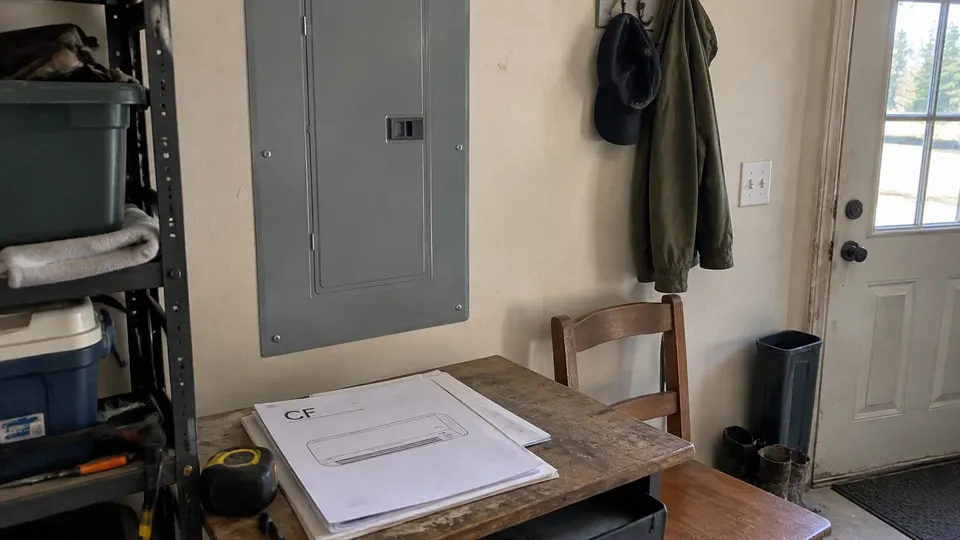
- Turn the unit off and cut power first. Both Mitsubishi and Daikin say to stop the unit and turn off power or the breaker before cleaning.
- Water temperature. Mitsubishi says not to use water hotter than 122°F (50°C) on the nano platinum filter. Daikin says lukewarm water. Midea's manual in our cleaning guide says mild detergent only.
- Detergent. Use only a diluted neutral detergent. Mitsubishi says not to use benzine, thinner, polishing powder or insecticide.
- Drying. Dry in the shade. Mitsubishi says not to dry with direct sunlight, heat or fire. Daikin says filters must be completely dry before you put them back.
- Soaking limits. Mitsubishi says not to soak the black deodorizing filter in water for more than two hours.
- Do not touch the metal. Mitsubishi warns not to touch the metal parts with your hands. The edges can cut.
- Put them back correctly. Install every tab. A filter that is not seated lets dust bypass it.
How to tell the filter is clean enough
After you put it back, here is how to know the job is done.
Hold it to a window. You should see light through the mesh. Daikin says dirty filters cannot deodorize or clean the air, give weaker heating and cooling, and cause odor. If a smell stays after a clean, the deodorizing filter may need replacing. Mitsubishi says to replace it when dirt or smell cannot be removed by cleaning.
When cleaning is not enough
- A filter that is torn, warped or stiff needs replacing. See mini split filter replacement.
- Water on the floor despite clean filters is a drain question. See mini split drain line.
- Weak airflow with clean filters is covered in mini split not cooling.
A reminder on the display is not always a fault. For a Samsung unit showing CF, see the Samsung CF-code guide and match the reset instructions to your controller.
Sources
- Mitsubishi Electric operating instructions, MSZ-FS06 to FS18NA
- Daikin user reference guide, FTXTP-N and FTXTP-M
- Midea ductless split owner's manual
Follow your unit's own manual. This is general information.